



An airport pickup may look profitable because the fare is high, but waiting time, approach distance and uncertain return trips can change the result.
This guide focuses on the choices readers can verify, the mistakes that create unnecessary risk, and the records or instructions worth checking before they act. Details differ by person, location and equipment or legal setting. Use current primary sources for anything that could change after publication.
Understanding rideshare airport queue strategy before making a decision
Rideshare airport queue strategy starts with arithmetic rather than optimism. A driver who waits forty minutes for a pickup has spent working time even if the app shows no active passenger. Add travel to the airport, legal holding-area fees where applicable and empty miles after drop-off. The best trip is not always the highest fare on the screen.
Drivers should decide what counts as a successful queue shift before arriving. A reasonable target might involve a maximum wait, minimum expected hourly net profit and an acceptable ending area. These thresholds are personal rather than guarantees. When the app’s estimated queue does not align with observed movement, use recent experience and current rules to decide whether the wait still makes sense.
Identify the facts and limits first
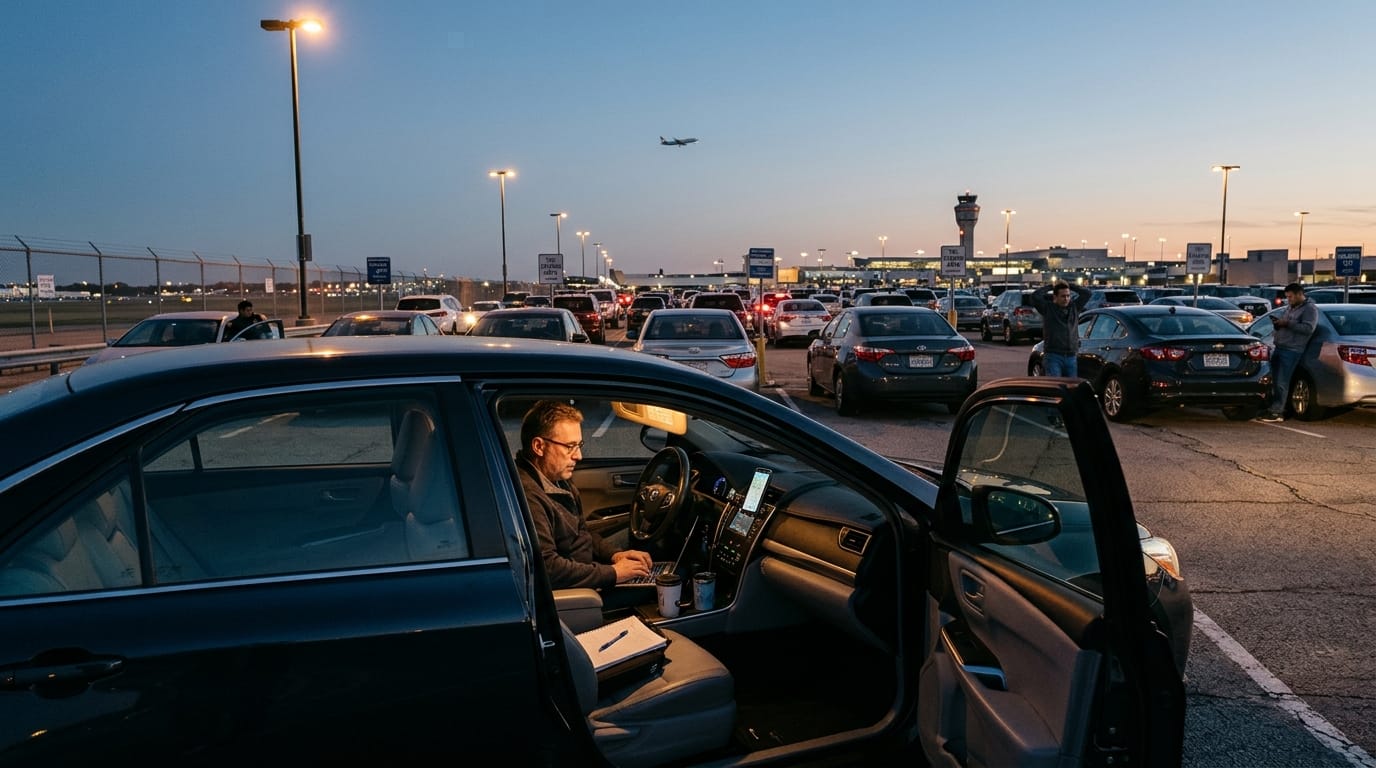
Airports often use designated staging lots or app-specific queue instructions. Rules differ by airport and platform, and unauthorized waiting can lead to citations or account problems. Drivers should consult the current airport and rideshare app guidance rather than copying an informal tip from another city. A waiting lot may be mandatory even when the curb appears empty.
Queue position can change when drivers leave the zone, receive rematches or switch apps. Details are platform-specific and subject to change. Take screenshots of important policy notices for personal reference, but do not attempt to defeat queue rules or use fake locations. Sustainable earnings rely on compliance and reliable service.
Log actual waiting time and approach miles

A good profit comparison includes expected earnings after fuel or charging, vehicle wear and the value of the driver’s time. If an airport trip pays more but consumes twice the total time of several local rides, it may lower hourly net earnings. Use a rolling sample of completed shifts rather than one unusually good airport pickup.
Airport pickup zones can move during construction or large events. A familiar approach road may close, and an app map may not immediately reflect temporary traffic management. Respect curb officers and official signage. The driver who saves five minutes by entering an unauthorized lane risks penalties and can make passenger loading less safe for everyone.
Track return-trip and deadhead distance
Deadheading describes driving without a paying passenger. Airport trips can involve dead miles both before and after the ride, especially when a long trip ends far from demand. Track these miles for business analysis and apply tax recordkeeping rules relevant to the jurisdiction. Do not assume every logged mile is automatically deductible under every circumstance.
Flight arrival schedules can indicate potential demand, but they do not guarantee a favorable queue. Weather, events, airline delays and the number of competing drivers affect conditions. A public flight board is context, not a prediction of earnings. Build a rule for leaving the airport if the queue does not move within an acceptable window.
Recognize where assumptions break down
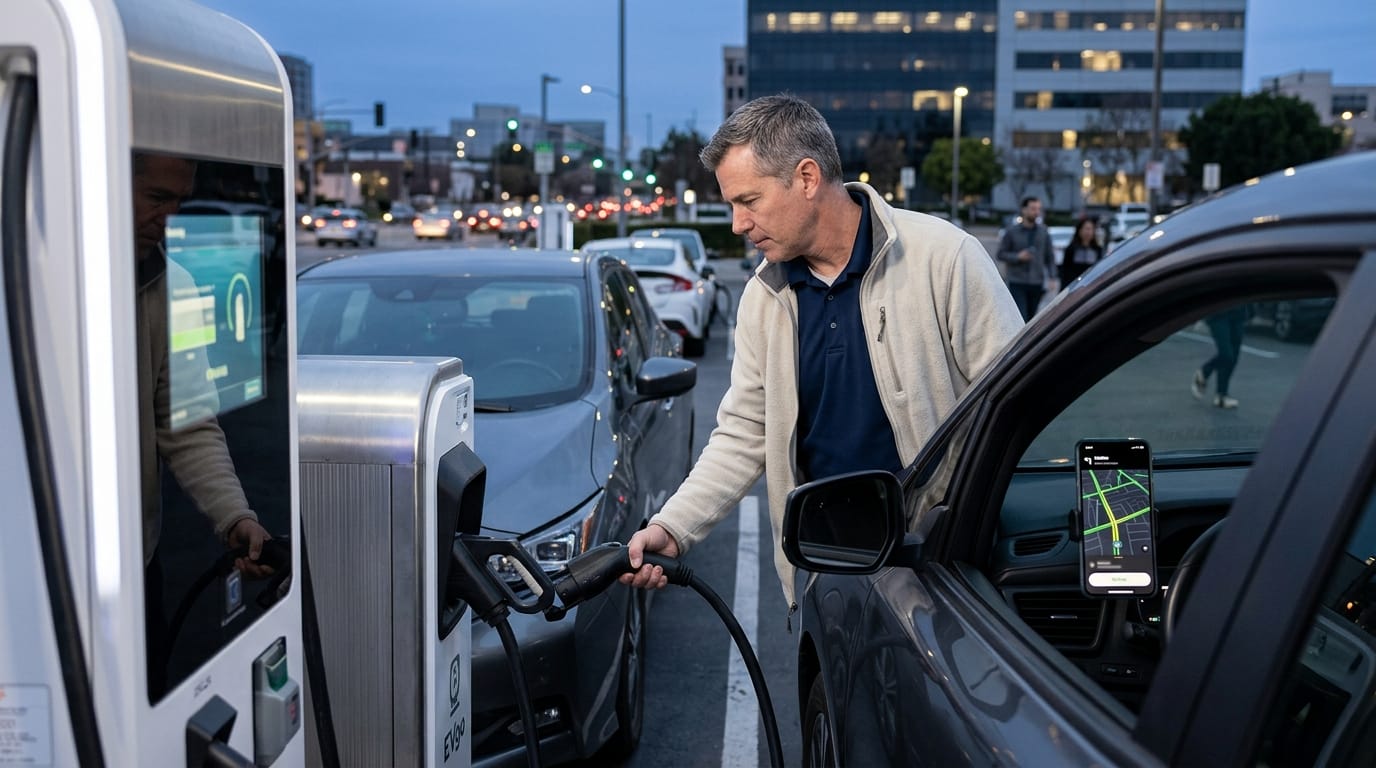
Battery and fuel levels deserve attention before entering a long queue. An EV driver should know whether charging access is practical without losing position and whether the next ride may be lengthy. Gasoline drivers should also avoid idling unnecessarily when local rules allow the engine to be off. Energy costs belong in the trip calculation.
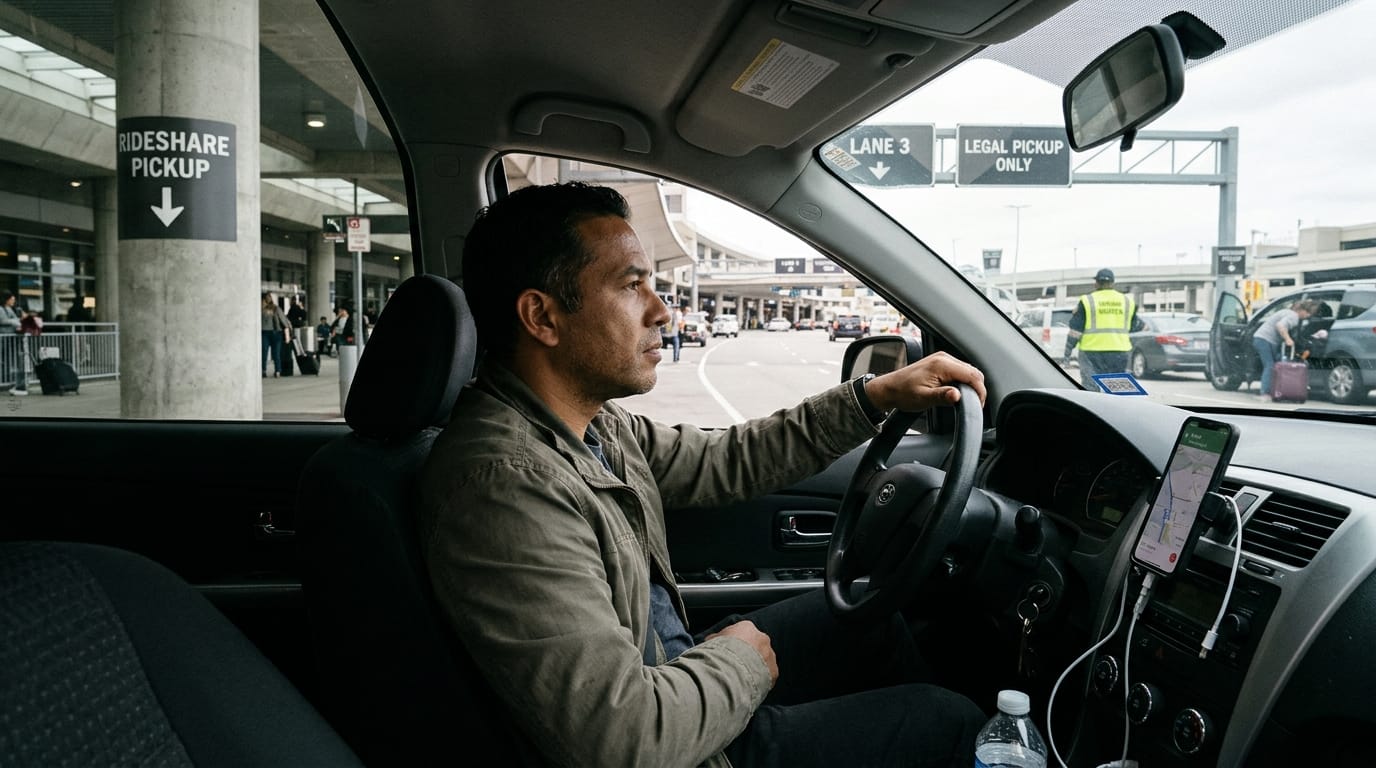
Passenger pickup instructions should be communicated clearly and calmly. At busy terminals, confirm the legal pickup zone, vehicle details and passenger name according to app policy. Never stop in a restricted lane or make a dangerous maneuver because a passenger is impatient. The cost of a citation or crash outweighs a single fare.
Driver data should be recorded consistently. A shift that begins at the airport holding lot but excludes the half-hour trip to get there overstates profitability. Similarly, a large tip on one ride should not be treated as normal. Compare the same categories of cost and time across several days so the decision is based on a fair sample.
Practical steps for rideshare airport queue strategy
Some drivers prefer airport shifts for predictable passenger luggage needs; others find city trips more consistent. Neither approach is inherently superior. Compare actual completed ride data, wait distributions, tips and vehicle requirements. New drivers should test a limited number of shifts before assuming the airport is their best market.
Cancellation and no-show policies can affect earnings, but eligibility and timing vary. Read the platform’s current terms instead of relying on a social post. Document app errors through official support channels. Avoid confrontations with passengers over fees; safety and professional conduct are more important than arguing at the curb.
Evaluate evidence and next steps
A simple spreadsheet can track arrival time, queue entry, assignment time, loaded miles, total fare, tip, expenses and ending location. This reveals patterns that are invisible in an individual trip receipt. Drivers can compare mornings, evenings and different weekdays without turning anecdotal reports into universal rules.
An airport ride may end in a distant neighborhood with little return demand. Before accepting, consider the platform’s available trip information and the market characteristics you already know. Never use unsafe phone interaction while moving. If the destination becomes clear only later, log the result and improve the next comparison instead of reacting emotionally to a single low-value trip.
Set a safe exit point for a stalled queue
Opportunity cost is the central question: what else could the driver have earned during that waiting period? Comparing a reasonable alternative does not require perfect forecasting. Use typical local trip performance from recent shifts and update the assumption as patterns change. A driver who knows when to stop waiting may outperform one chasing a dramatic airport fare.
Reassess after several comparable shifts
The strongest rideshare airport queue strategy is measured, lawful and flexible. Confirm airport rules, set a time threshold, calculate net profit and leave when the expected value falls below a realistic alternative. The airport is one possible market, not a guaranteed shortcut to better income.
There is no universally optimal airport queue strategy for every city or driver. Vehicle type, local rules, charging needs and the value of available city trips all change the calculation. The most useful habit is reviewing actual net results each week and adjusting the plan. That is more durable than following a dramatic earnings screenshot with no expense context.
Practical checklist:
- Read current airport staging rules and app policy
- Log actual waiting time and approach miles
- Calculate net profit rather than gross fare
- Track return-trip and deadhead distance
- Set a safe exit point for a stalled queue
- Reassess after several comparable shifts
Common questions
Does a longer airport ride always pay better? Not after time, dead miles and expenses are included.
Can drivers stage anywhere near an airport? No. Follow the specific airport and platform holding rules.
Does a flight arrival guarantee demand? No. Competition and operating conditions can change the queue.
Should I switch apps to bypass the queue? Follow platform rules; manipulating location or queues can create compliance problems.
For related context, see the ridesharedrivers.club guide. For authoritative reference, review this primary resource and additional official or technical guidance. Verify updates, dates and jurisdiction before applying general guidance to a specific situation.
Use this guide as a starting framework rather than a promise of a particular outcome. For rideshare airport queue strategy, the most useful next move is to verify the applicable details, preserve accurate information and make a decision based on the real conditions in front of you. When specialist advice, official instructions or a qualified inspection is appropriate, seek that input before a decision becomes difficult to reverse.